Car Mileage Tips
Honda Accord vs Toyota Camry - Car Comparison
Share this :
Honda Accord vs Toyota Camry: Which One Actually Deserves Your Money?
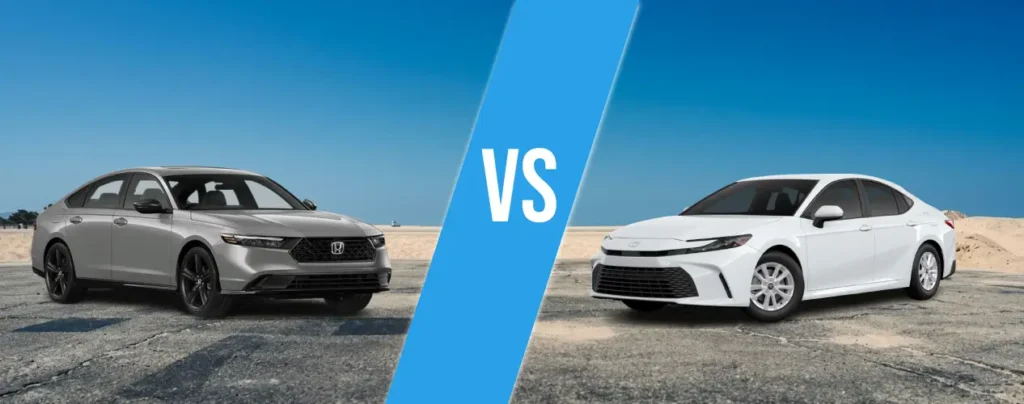
People have been arguing about the Honda Accord vs Toyota Camry for decades. Go to any car forum, ask a mechanic, or bring it up at a family gathering and you will immediately get strong opinions from both sides. Both cars have earned those opinions honestly. They have been the two best-selling midsize sedans in the world for years, and both continue selling in massive numbers even as SUVs have taken over practically every parking lot on the planet.
So what actually separates them in 2025? The answer is more interesting than you might expect. This comparison breaks down everything that matters, from performance and fuel economy to interior space, reliability, and long-term ownership costs. Whether you are buying new, shopping used, or sourcing a Japanese export through a trusted exporter, this guide will help you figure out which car makes more sense for your situation.
Where Each Car Stands Today
The 2025 Toyota Camry made a bold move by going hybrid-only across its entire lineup. Toyota essentially retired the purely gasoline Camry, and every single trim now pairs a 2.5-litre four-cylinder engine with an electric motor. Output sits at 225 to 232 horsepower depending on the variant, which is actually more power than most buyers expected from a hybrid family sedan. You also get the option of all-wheel drive on every trim, which is something the Accord cannot match at all.
The Honda Accord takes a different approach. Honda gives you a choice between a turbocharged 1.5-litre gasoline engine producing 192 horsepower on the base trims, and a more sophisticated two-motor hybrid system making 204 horsepower on the upper trims. If you want hybrid efficiency, you pay for it through the trim ladder. That flexibility is either a strength or a complication depending on how you look at it, and your view on that will likely determine which car appeals to you more.
Performance and Driving Feel
On paper, the Camry has more power. In the real world, both cars feel smooth, competent, and predictable in a way that midsize sedan buyers tend to appreciate. Neither car is trying to be sporty, and both are tuned for comfortable daily driving rather than corner carving. That said, they do have different personalities behind the wheel.
The Accord has always been known for its more involving steering and sharper body control. It feels slightly more connected to the road. The Camry feels more planted and settled, particularly on longer motorway drives. If you spend most of your time on highways, the Camry feels like it was built specifically for you. If city driving and tighter urban roads make up most of your daily commute, the Accord tends to feel more at home.
The Camry also wins outright on all-wheel drive availability, which genuinely matters if you live somewhere with challenging road conditions or winter weather. The Accord is front-wheel drive only, regardless of which trim you choose.
Fuel Economy: Both Are Genuinely Impressive
With the 2025 Camry going all-hybrid, Toyota is pushing fuel economy as one of its central selling points. The base Camry LE hybrid returns around 51 miles per gallon combined, which is exceptional for a car this size and this comfortable. Even the all-wheel drive variants hold up well at around 44 mpg combined.
The Honda Accord Hybrid is not far behind. The top hybrid trims return around 44 to 48 mpg combined depending on the variant. If you go with the base gasoline Accord instead, you are looking at around 32 mpg combined. That is still respectable for a midsize sedan but obviously trails the hybrid numbers by a significant margin.
For buyers primarily focused on fuel costs over years of ownership, the Camry has a clear edge, especially when you compare the two on a hybrid-to-hybrid basis.
Interior Space and Comfort
This is where the toyota camry vs honda accord specs comparison starts to favour the Accord. The Honda is slightly longer overall at 195.7 inches versus the Camry at 193.5 inches, and that difference shows up inside. The Accord offers 40.8 inches of rear legroom compared to 38 inches in the Camry. If you regularly carry adult passengers in the back seat, that gap is genuinely noticeable on longer trips.
Trunk space tells a similar story. The Accord gives you 16.7 cubic feet of cargo room. The Camry offers 15.1 cubic feet. Neither is cramped, but the Accord wins on practicality if you need the extra room for luggage, shopping, or carrying equipment.
Interior quality also leans toward the Accord. The dashboard design is cleaner and more thoughtfully laid out, with soft-touch materials covering the areas you actually interact with most often. The Camry’s interior gets the job done but can feel a bit busier and more plasticky in certain areas, particularly on the lower trims.
Technology and Infotainment
Both cars have invested heavily in their infotainment systems over recent years. The base 2025 Camry LE comes with an 8-inch touchscreen, wireless Apple CarPlay and Android Auto, wireless device charging, and five USB ports straight from the factory. That is genuinely good value at the entry price point.
The Accord Sport Hybrid steps things up with a 12.3-inch touchscreen, a moonroof, and 19-inch wheels as part of its standard package. The larger screen gives the Accord a more premium feel, though Honda’s infotainment interface has historically had a few usability quirks that some drivers find irritating with extended use.
Both cars include comprehensive driver assistance systems as standard. The Camry comes with Toyota Safety Sense 3.0, covering adaptive cruise control, lane departure warning, automatic emergency braking, and lane centering. Honda Sensing on the Accord covers similar ground and performs at an equally capable level.
Reliability: What the Data Actually Shows
Both Toyota and Honda are known for building cars that last, and the honda accord vs toyota camry reliability comparison is genuinely close. However, recent independent data gives the Camry a measurable edge.
The 2025 Toyota Camry ranks highest in the midsize car segment in the J.D. Power Vehicle Dependability Study, which tracks owner-reported problems during the third year of ownership. It also ranks highest in the J.D. Power Initial Quality Study, which covers problems reported in the first 90 days of ownership. The Accord does not appear in the top three of either study for its segment.
On warranty coverage, both cars come with a three-year or 36,000-mile basic warranty and a five-year or 60,000-mile powertrain warranty. The Camry Hybrid pulls ahead on battery coverage with a 10-year or 150,000-mile hybrid battery warranty. The Accord Hybrid covers its battery for eight years or 100,000 miles. Over a decade of ownership, that difference in battery warranty can translate into meaningful peace of mind and real financial protection.
Pricing and Resale Value
The Camry holds a pricing advantage at the entry level. The base 2025 Camry LE starts at around $28,700 after destination, while the equivalent hybrid Accord Sport starts at approximately $33,655. If you are comparing the Camry and the Accord as hybrid sedans, the Camry is substantially cheaper to get into.
On resale, the two cars are remarkably close. The Accord retains approximately 65 percent of its value over five years compared to around 64.5 percent for the Camry. Both cars hold their value well because they are broadly trusted, widely serviced, and in strong demand in the global used car market.
What Long-Term Owners Actually Say
Reading through honda accord vs toyota camry reviews from owners who have kept their cars for several years reveals a consistent pattern. Camry owners talk about how trouble-free the experience has been, how the car just keeps going without drama, and how the hybrid system feels seamless after years of use. Accord owners talk about enjoying the drive more, appreciating the extra rear space, and preferring the way the cabin looks and feels on a daily basis.
The complaints are just as telling. Camry owners sometimes note that the interior lacks inspiration. Accord owners occasionally mention that the infotainment interface takes some adjustment, and a few note that the base gasoline engine can feel slightly underpowered when merging or passing at speed on highways.
Neither group tends to have serious mechanical complaints after extended ownership. That speaks well of both cars and both brands.
So Which One Should You Choose?
There is genuinely no wrong answer here, and the toyota camry vs honda accord debate does not have a single definitive winner for all buyers. It comes down to what you prioritise.
Choose the Toyota Camry if fuel economy is your primary focus, if you want all-wheel drive capability, if you live somewhere that demands a reliable car with minimal fuss, or if extended battery warranty coverage matters to you. The Camry’s reliability study rankings and its stronger hybrid credentials make it the safer long-term choice for most buyers.
Choose the Honda Accord if you regularly carry rear passengers and value the extra legroom, if a more refined interior environment matters to your daily experience, if you want a slightly more engaging drive, or if you want the flexibility of choosing between gasoline and hybrid without a significant price jump.
Both cars will serve you well for many years if properly maintained. The good news is that choosing between them is genuinely one of the easier decisions in the car buying process something we often highlight at Autoyologist to help buyers make confident decisions.
Popular Categories
Latest Article

June 29, 2026

Frequently Asked Questions
Is the Honda Accord or Toyota Camry more reliable?
Both are among the most reliable vehicles in the midsize sedan class. The Toyota Camry currently holds a measurable edge, ranking highest in the midsize segment in J.D. Power's Vehicle Dependability Study and Initial Quality Study. The Accord is a close second and has a strong ownership record over many years of production.
Which car has better fuel economy?
The 2025 Toyota Camry leads on fuel efficiency. The base hybrid model returns around 51 mpg combined. The Honda Accord Hybrid achieves around 44 to 48 mpg combined depending on the trim. On a hybrid-to-hybrid comparison, the Camry still has the advantage.
Which car offers more interior space?
The Honda Accord offers more interior space. It provides 40.8 inches of rear legroom versus 38 inches in the Camry, and its trunk holds 16.7 cubic feet compared to the Camry's 15.1 cubic feet. For families who regularly carry passengers in the rear seats, this is a meaningful difference.
Which car holds its resale value better?
Both cars retain their value exceptionally well. Over five years, the Honda Accord retains approximately 65 percent of its original value compared to roughly 64.5 percent for the Toyota Camry. The difference is small enough that resale value alone should not drive the decision between the two.
Does the Toyota Camry offer all-wheel drive?
Yes. The 2025 Toyota Camry offers all-wheel drive across all trim levels. The Honda Accord is front-wheel drive only and does not offer an all-wheel drive option on any variant.

A dedicated platform for car lovers, offering honest reviews, guides, and updates from the automotive world.