CAr comparison
New Cars vs Used Cars: Cost, Reliability, and Resale Compared
Share this :
New Cars vs Used Cars: Cost, Reliability, and Resale Compared
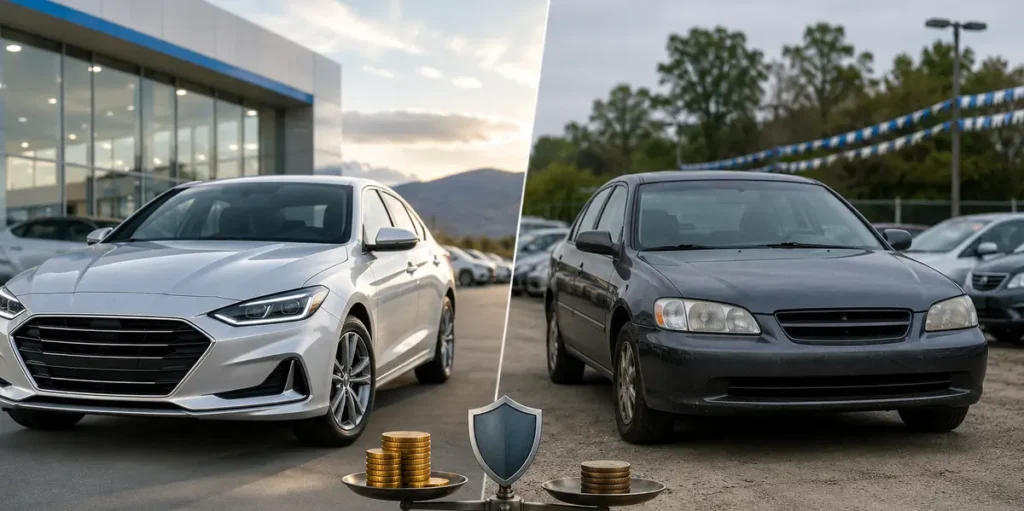
Buying a car sounds simple until you get stuck on one question: should you buy new or used?
A brand-new vehicle offers that factory-fresh feeling, a full warranty, and the latest technology. A used car, on the other hand, can save you thousands before you even leave the dealership. That is why the new vs. used car debate never really dies.
Here’s the thing. There is no single right answer for everyone. The better choice depends on your budget, driving habits, and how long you plan to keep the vehicle.
Key Takeaways
- New cars offer warranties, modern safety features, and lower repair risk.
- Used cars cost less upfront and avoid the steepest depreciation.
- Insurance premiums are usually lower for used vehicles.
- A well-maintained used vehicle can be just as dependable as a newer one.
- Buyers planning to keep a vehicle for many years may benefit from either option depending on purchase price and ownership costs.
- Depreciation remains the biggest financial advantage of buying used. Many vehicles lose a significant portion of their value during the first few years of ownership.
New vs. Used Cars at a Glance
New cars win on predictability. Used cars win on value.
New Car vs Used Car Comparison Table
This new car vs used car comparison highlights the biggest differences in cost, reliability, depreciation, and ownership experience.
Factor | New Car | Used Car |
Purchase Price | Higher | Lower |
Warranty Coverage | Full manufacturer warranty | Limited or none |
Depreciation | Steepest in early years | Already absorbed |
Insurance Cost | Usually higher | Usually lower |
Technology | Latest features | Depends on model year |
Maintenance Risk | Lower short-term | Varies by condition |
Financing Offers | Better rates common | Rates may be higher |
Resale Value | Larger early losses | More stable |
Buy New Car or Used Car: What Should You Consider?
The more expensive car is not always the wrong choice. Sometimes the cheaper option is the wrong choice because it does not fit how you actually use your vehicle.
Budget and Total Cost
Shopping by monthly payment alone makes it easy to underestimate the real cost of car ownership. The real number includes insurance, registration, maintenance, fuel, and depreciation. That last one alone can cost thousands in the first year.
Used cars have already taken that hit. Someone else owned them during the expensive years. That is the whole argument for buying used in one sentence.
There is also a trim-level effect worth knowing. The same budget that buys a base-spec new car often buys a well-equipped used one.
Driving Habits and Ownership Plans
The number of kilometers you drive each year changes the math considerably.
High-mileage drivers get more value from a warranty. If something breaks at 40,000 km, you want that covered. Lower-mileage drivers, especially people who mostly commute short distances or use transit part of the time, often get more out of a used car.
Selling in three years? Depreciation is your enemy and buying new is expensive. Keeping it for a decade? Both options can work, and the specific model starts to matter more than new vs. used.
Financing, Insurance, and Maintenance
Manufacturers sometimes offer promotional rates, occasionally even 0%, that are hard to beat through a bank. Used car loans typically carry higher interest, which quietly closes some of the price gap.
Insurance runs cheaper on used vehicles because the replacement value is lower. Maintenance costs can run higher on older vehicles, but condition and service history matter far more than age. A 2018 Honda Civic with full service records is less of a gamble than a newer car with no paperwork.
New Car Reliability vs Used Car Reliability
When discussing new car reliability, many buyers assume newer automatically means better. New doesn’t automatically mean reliable. Used doesn’t automatically mean risky.
Vehicles last longer now than they did twenty years ago. The average age of cars on the road keeps going up. A well-maintained six-year-old vehicle is not a liability. It is a known quantity with a track record.
Why New Cars Feel Safer to Buy
You know exactly what happened to it because you were there for all of it. No questions about the previous owner, no wondering what that noise was before you bought it. The warranty covers manufacturing defects and most major failures for years. For buyers who genuinely hate uncertainty, that’s worth real money.
When Used Cars Can Be Just as Reliable
Consumer Reports has repeatedly ranked brands like Subaru, Lexus, and Toyota highly for reliability. Used car reliability often depends more on maintenance history than age alone. The common thread isn’t the brand so much as maintenance history. A cared-for car is a reliable car. That’s true whether it’s two years old or eight.
Red Flags to Check Before Buying Used
Some used cars are bargains. Some are problems someone else got tired of dealing with. Before buying, check:
- Vehicle history report
- Accident and title records
- Full service history
- Mileage consistency
- Tire wear patterns
- Signs of flood damage
- Independent mechanical inspection
The inspection costs a few hundred dollars. It can save buyers from expensive repair mistakes. Buyers who are not comfortable evaluating a vehicle themselves often work with established exporters and dealers that provide inspection reports, service records, and vehicle history information upfront.
Used Cars vs New Cars Pros and Cons
Pros and Cons of Buying a New Car
The case for new: full warranty, current safety technology, competitive financing rates, zero ownership history to worry about, and lower repair risk in the first few years.
The case against: you are paying the highest price the car is likely to have. Losing the most value per year right away, and paying more to insure it.
Pros and Cons of Buying a Used Car
The case for used: lower price, depreciation already absorbed, cheaper insurance, and the ability to get more car for the same money.
The case against: potential hidden problems, limited warranty coverage, older safety features, and more homework required before buying.
New Car or Used Car: Which Is Better for You?
Best for Families
Families who want current safety systems and predictable costs tend to lean new not because used cars are unsafe, but because the warranty removes a category of stress. With kids in the car, fewer surprises matter.
Best for Budget Buyers
Used. The depreciation argument alone usually settles it. You’re not getting a worse car you’re getting the same car after someone else paid for the expensive years.
Best for Long-Term Ownership
Closer than people expect. A reliable new car driven for ten years works out well. A solid used car driven for another decade can work out better. At this horizon, the specific model and how well you maintain it matters more than whether you bought it new.
Best for Latest Features
New, without question. Advanced driver assistance, updated infotainment, and better fuel economy: none of that comes standard on older vehicles.
Final Verdict: Should You Buy New or Used?
Most buyers get more for their money with a well-maintained used car. Lower price, slower depreciation, cheaper insurance. That combination is hard to argue with.
New cars make sense for specific buyers: people who want warranty coverage, current safety tech, and no questions about what happened before they owned it. That’s a legitimate set of priorities. It just costs more.
Buy new if certainty matters more than savings. Buy used if savings matter more than certainty. Neither is the wrong answer; it depends on what you’re actually optimizing for.
Popular Categories
Latest Article

June 29, 2026

Frequently Asked Questions
Is it better to buy a new car or a used car?
For most buyers, used cars offer better value. Someone else took the depreciation hit during the expensive early years. New cars make sense if you want a warranty and current technology and are willing to pay for both.
Are used cars reliable?
Yes, with caveats. Brands like Toyota and Honda regularly deliver strong reliability well past 100,000 miles. What separates a reliable used car from a problem one is usually maintenance history, not age.
Is a new car worth the extra cost?
Sometimes. If warranty coverage and lower repair uncertainty are genuinely important to you, yes. If you're mainly chasing a lower monthly payment on a new car while financing for seven years, probably not.
What is the biggest benefit of buying used?
Avoiding early depreciation. Many vehicles lose 20% or more of their value in the first year. Buying used means someone else absorbed that.
Which is better for long-term ownership?
Whichever vehicle has the better maintenance record. Many owners now keep cars for over a decade, and at that time horizon, service history matters far more than new vs. used.
Do used cars always cost less to own?
Not always. The purchase price is lower, but repair and maintenance costs can be higher. Total cost depends heavily on the specific vehicle, its age, and how well it was maintained.
Is depreciation really that important?
Yes. In the first few years of ownership, depreciation is often the single largest cost, bigger than insurance and fuel. Most people underestimate it.

A dedicated platform for car lovers, offering honest reviews, guides, and updates from the automotive world.