
Car Engine Guide
Sugar in Fuel System: Myths, Facts, and Real Engine Risks
Share this :
Sugar in Fuel System: Myths, Facts, and Real Engine Risks
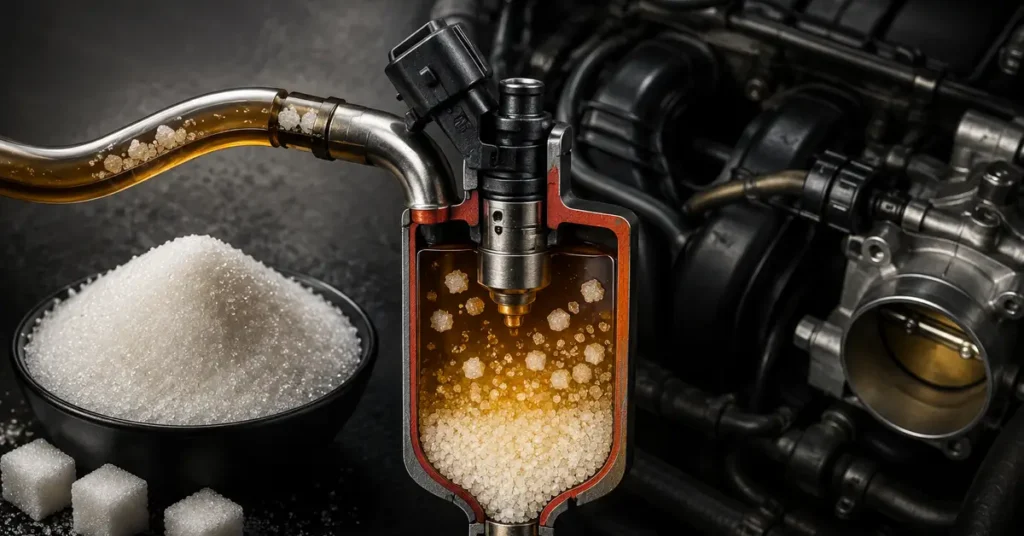
If you have ever heard someone say that pouring sugar into a gas tank will instantly destroy a car engine, you are not alone. It is one of the oldest automotive myths that continues to spread online and through word of mouth. While adding anything other than fuel to a vehicle is a bad idea, the truth is more complicated than many people believe.
In this guide by Autoyologist, we will explain what really happens when sugar enters a fuel system, separate myths from facts, discuss the actual risks, and show you how to fix the problem if it ever happens.
Does Sugar Dissolve in Gasoline?
The simple answer is no.
Sugar does not dissolve well in gasoline. Unlike water, gasoline cannot break down sugar crystals. Most of the sugar stays at the bottom of the fuel tank instead of mixing with the fuel.
Because of this, sugar does not travel through the fuel system the way many people imagine. That is why the popular belief that sugar melts into the fuel and destroys the engine is not accurate.
However, this does not mean sugar is harmless.
What Happens if You Put Sugar in Fuel Tank?
Many people ask, what happens if you put sugar in fuel tank?
The answer depends on how much sugar is added and whether the vehicle is started afterward.
Here is what may happen.
- Sugar settles at the bottom of the fuel tank.
- The fuel pump may pick up some sugar particles.
- The fuel filter can become clogged.
- Fuel flow may become restricted.
- The engine may hesitate, misfire, or stall.
- In severe cases, the fuel pump may suffer damage from contamination.
The biggest problem is not that sugar melts into gasoline. The problem is that solid particles can block parts of the fuel system.
Sugar in Gas Tank Effects
The actual sugar in gas tank effects are usually related to contamination rather than chemical damage.
Common symptoms include:
- Difficulty starting the engine
- Rough idle
- Loss of engine power
- Engine stalling
- Poor fuel economy
- Check Engine Light
Modern vehicles have very sensitive fuel injectors. Even small amounts of debris can interfere with normal fuel delivery.
Can Sugar Ruin a Car Engine?
A common question is, can sugar ruin a car engine?
Not directly.
Sugar itself does not chemically destroy pistons, cylinders, or engine components. The engine is more likely to suffer from fuel starvation than internal damage.
If contaminated fuel reaches sensitive fuel system parts, repairs can become expensive. A clogged fuel filter, damaged fuel pump, or blocked injectors may require replacement.
The good news is that if the problem is caught early, permanent engine damage is unlikely.
Common Fuel System Damage Causes
Sugar is only one possible source of contamination. In reality, there are many fuel system damage causes, including:
Dirty Fuel
Fuel contaminated with dirt or debris can clog filters and injectors.
Water in the Fuel Tank
Water reduces combustion efficiency and may cause corrosion inside the fuel system.
Rust Inside the Tank
Older vehicles may develop rust that breaks loose and blocks fuel flow.
Low Quality Fuel
Poor quality gasoline may leave deposits inside fuel injectors over time.
Incorrect Fuel
Using diesel in a gasoline engine or gasoline in a diesel engine can create serious mechanical problems.
Signs Your Fuel System May Be Contaminated
If you suspect contamination, watch for these warning signs:
Hard Starting
The engine may crank longer than normal.
Engine Misfires
Restricted fuel flow can interrupt proper combustion.
Loss of Power
The engine may struggle during acceleration.
Poor Fuel Economy
An inefficient fuel supply often increases fuel consumption.
Frequent Stalling
If enough contamination blocks fuel delivery, the engine may stop running altogether.
How to Fix Contaminated Fuel System
Many vehicle owners wonder how to fix contaminated fuel system problems after discovering sugar or other debris inside the tank.
The repair process usually includes the following steps.
Drain the Fuel Tank
The contaminated fuel should be safely removed.
Remove the Fuel Tank
In many cases, the tank must be removed for complete cleaning.
Clean the Tank Thoroughly
Any remaining sugar or debris should be washed out before reinstalling the tank.
Replace the Fuel Filter
A clogged filter should always be replaced after contamination.
Inspect the Fuel Pump
If debris has reached the pump, it should be checked for damage.
Check Fuel Injectors
Modern injectors can become blocked by contamination. Professional cleaning or replacement may be necessary.
Attempting to simply add fresh gasoline without cleaning the system usually does not solve the problem.
Can Fuel Additives Fix Sugar Contamination?
No.
Fuel additives are designed to clean deposits inside injectors and fuel lines. They cannot dissolve sugar inside gasoline or remove solid particles from the fuel tank.
If sugar has entered the tank, mechanical cleaning is the correct solution.
How to Prevent Fuel System Contamination
Preventing contamination is much easier than paying for repairs.
You can reduce the risk by following these simple tips.
- Always close and lock your fuel door when possible.
- Buy fuel from trusted gas stations.
- Replace the fuel filter according to your vehicle manufacturer’s maintenance schedule.
- Avoid storing fuel in dirty containers.
- If you suspect tampering, do not start the vehicle until it has been inspected.
Final Thoughts
The idea that sugar instantly destroys an engine is mostly a myth, but that does not mean it should be ignored. While sugar does not dissolve in gasoline or chemically ruin engine parts, it can contaminate the fuel system, clog filters, reduce fuel flow, and lead to costly repairs if left untreated.
If you suspect sugar has entered your vehicle’s fuel tank, avoid starting the engine and have the fuel system inspected as soon as possible. Acting early can prevent unnecessary damage and save money.
At Autoyologist, we believe that understanding the facts helps drivers make smarter decisions and avoid costly automotive problems. When it comes to a sugar in fuel system, the truth is far less dramatic than the myth, but it is still a problem worth taking seriously.
Popular Categories
Latest Article
June 29, 2026

June 29, 2026

June 17, 2026

June 17, 2026
Frequently Asked Questions
Can sugar dissolve in gasoline?
No. Sugar does not dissolve effectively in gasoline and usually settles at the bottom of the fuel tank.
Will sugar destroy an engine?
Not directly. It is more likely to clog parts of the fuel system than damage internal engine components.
How expensive is it to repair a contaminated fuel system?
Costs vary depending on the amount of contamination. Cleaning the tank and replacing the fuel filter is usually less expensive than replacing the fuel pump or fuel injectors.
Should I drive my car if someone put sugar in the gas tank?
No. Driving the vehicle can spread contamination through the fuel system and increase repair costs.
Can a mechanic completely fix sugar contamination?
Yes. In most cases, professional cleaning of the fuel tank and inspection of the fuel system restores normal operation.

A dedicated platform for car lovers, offering honest reviews, guides, and updates from the automotive world.