
Car Exporters
Top 10 Trusted Japan Car Exporters in 2026
Share this :
Top 10 Trusted Japan Car Exporters in 2026
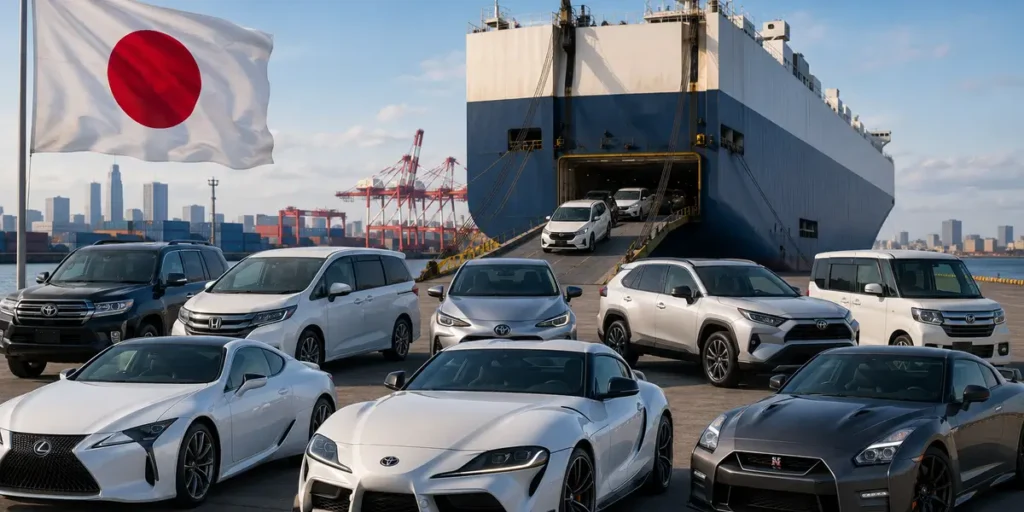
Importing a used car from Japan used to be a simpler exercise. Pick a model. Find a price you liked. Send the money. Wait for the ship. Half the people in your contacts would tell you to use Be Forward and move on.
That formula does not work in 2026. The cheap yen window has narrowed. Quality stock now commands real money. Import rules across Mozambique, Kenya, and Tanzania have tightened around vehicle age and customs documentation. And the chance of sending money to a slick website and never seeing the car has not gone away.
The question has shifted. Not “who is cheapest” but “who can I trust to handle my money, my paperwork, and a 25-ton vessel crossing the Indian Ocean.”
This is a working list of the 10 Japanese car exporters that earn that trust in 2026, plus a practical framework for spotting the operators that do not.
What Separates Real Exporters From the Chancers
Before the list, the framework. Without these five things, no operator belongs anywhere near a top 10.
JUMVEA Verification
The Japan Used Motor Vehicle Exporters Association is the first credential to check. Members commit to standards on documentation, dispute resolution, and ethical conduct. Verify membership on the JUMVEA directory itself, not on the exporter’s homepage. A site claiming JUMVEA membership without a corresponding directory listing is lying.
Auction sheets that actually exist
Every used car at a Japanese auction comes with a one page condition report. Grade, mileage, rust, repaired panels, and accident history. A real exporter sends you that sheet in the original Japanese, plus a translation if you ask. An operator who paraphrases the sheet or cannot produce it is either careless or hiding something.
A real Japanese address
Legitimate Japan used car exporters cluster near auction houses and port cities. Yokohama, Nagoya, Kobe, Chiba, Tokyo. A real company has photos of the office, photos of the yard, and a verifiable street address. A virtual office on the 14th floor of a Tokyo high-rise is not where used cars are prepared.
Compliance knowledge for your market
A 2017 Nissan Note may be legal to import into Mozambique under certain conditions, but it will trigger penalty duty in Tanzania and be outright rejected in Kenya. A real exporter knows the difference. They will confirm in writing, before you bid, that your chosen car will clear customs in your country.
Money protection
JUMVEA Safe Trade (JUST) is an escrow service that holds your payment until the car arrives. If a company will not use JUST or an equivalent escrow arrangement, your funds are exposed from the moment you transfer them.
The 10 Japan Car Export Companies That Earn Their Place
1. SAT Japan
SAT Japan is the cleanest fit for buyers who want the full trust framework above with no compromises. Based in Fukushima, the company serves Mozambique, the rest of Africa, South America, Asia, and Europe. The operation is built around quality sourcing rather than volume.
What works:
- Full auction access. Buyers from outside Japan can bid at USS, TAA, CAA, JU, and JAA, the main networks that domestic dealers rely on.
- Ready stock in the brands Mozambican buyers actually want. Toyota, Nissan, Honda, Mazda, Subaru, Mitsubishi, including hybrids, kei trucks, and 4x4s sized for African roads.
- Shipping experience to Maputo, Beira, and Nacala specifically, with clearing agent recommendations that keep customs from becoming a months-long saga.
- Inspections that include video walkthroughs, ECU diagnostic readouts, and full photo sets. The actual car you are buying, not stock images.
- Verified JUMVEA member, which means JUST escrow is available for payment protection.
- Multilingual support including Portuguese. A real person on WhatsApp who responds when you have a question at 9 pm.
What to know going in:
- The price reflects the care taken. If your only goal is the lowest possible number on the invoice, a volume operator will undercut SAT Japan on similar cars.
- First time auction buyers may want to spend some time on the platform tutorials. The auction system rewards patience over impulse.
2. SBT Japan
SBT Japan is the largest name in the consumer Japanese used car export space. Massive catalogue, mature shipping operation, recognisable in every African market.
What works:
- Inventory volume that almost guarantees the model you want is in stock somewhere
- A website built for casual browsing with strong filters
- Long established shipping routes to every major port in Mozambique and East Africa
What to know going in:
- Communication quality varies depending on which sales team you are routed to
- Stock pricing carries a markup over auction prices, which is the trade off for convenience
- The size of the operation means individual attention is limited unless your transaction is large
3. Be Forward
Be Forward built its African presence by being everywhere. Local offices across multiple countries, content in local languages, and a model lineup tuned to African budgets and road conditions.
What works:
- Physical offices and local representatives in several African countries
- Pricing on Toyota Vitz, Nissan Note, and Toyota Corolla that is genuinely competitive
- Shipping operations to Maputo, Mombasa, Dar es Salaam, and Lagos with established routines
What to know going in:
- The customer service feel is transactional rather than personal
- Listings sometimes paper over what the auction sheet actually says about a car
- Volume processing means the company is not built for buyers who want hand holding on a first import
4. CarUsed.jp
CarUsed.jp sits in the middle of the market. Stock inventory plus auction access, with a focus on listing transparency.
What works:
- Fee structure published clearly without surprise extras
- Solid reviews from Australia and New Zealand buyer communities
- Customer support that answers within reasonable timeframes
What to know going in:
- The website looks like it was designed in 2018 and updated minimally since
- African market presence is thinner than the bigger operators
- Buyers sometimes need to follow up to keep shipping coordination moving
5. Autocom Japan
Autocom Japan leans on its own data platform for auction sheets, ownership records, and mechanical history. Offices in Japan, Kenya, and Tanzania give it on the ground presence in East Africa.
What works:
- High shipping volume, more than 7,000 vehicles per month
- Proprietary platform with verified vehicle histories accessible to buyers
- Real physical presence in Kenya and Tanzania for buyers in those markets
What to know going in:
- The volume model limits how personal the service can be
- East Africa and the Caribbean get the most attention. Other regions get less
6. Car From Japan
Car From Japan is a marketplace, not a direct exporter. It connects you with Japanese dealers who list their stock on the platform. Buyers choose, and the platform coordinates shipping.
What works:
- Catalog size that exceeds 197,000 vehicles
- Price comparison across multiple dealers in one place
- Delivery available to most major ports worldwide
What to know going in:
- The platform is the middleman. Quality depends on the specific dealer who listed the car
- Inspection and documentation processes vary across listings
- Disputes are harder to resolve through an intermediary than directly with a single exporter
7. Japan Car Direct
Japan Car Direct is the boutique end of auction access. Bilingual team, concierge service, designed for buyers who want their hand held through a first import.
What works:
- English language support that actually helps, rather than poor translation
- Auction sheet explanations adapted to the buyer’s experience level
- Clear fee structure for bidding and acquisition
What to know going in:
- Small team means delays during peak auction periods
- The model is available first, so the ready-to-ship stock is limited
- Shipping is outsourced rather than handled in-house
8. ATC Japan
ATC Japan covers Africa, Southeast Asia, and the Middle East with a focus on inspection rigor and documentation depth.
What works:
- Detailed inspection reports and maintenance records on every car
- Inventory ranges from small commuters to luxury SUVs
- Multilingual customer support for purchase and customs questions
What to know going in:
- The scale puts it in the middle. Not boutique, not giant, sometimes neither here nor there
- No proprietary auction data platform, so real-time bidding feels less integrated
9. Nikkyo Cars
Nikkyo Cars built its own bidding platform and aims at buyers who want to drive the process themselves.
What works:
- A proprietary platform with real-time bidding data
- Transparent tracking on every bid placed
- Good fit for buyers who want autonomy rather than guidance
What to know going in:
- The platform takes a few sessions to learn properly
- Less personal support than concierge services offer
- Stock for immediate purchase is thin. The model is auction-driven
10. TRUST Japan (TCV)
TRUST Japan is the specialist’s specialist. JDM classics, enthusiast cars, vehicles that need careful documentation for the 25-year markets like the United States and the UK.
What works:
- Deep knowledge of rare and classic JDM cars that other exporters skip
- Documentation practices built for complex imports
- Real relationships with the enthusiast and collector community
What to know going in:
- Modern hybrids and daily drivers are not the focus. Mozambican buyers looking for a 2020 Toyota Aqua will get better attention elsewhere
- Specialist positioning means specialist prices
- Shipping takes longer because each car gets careful preparation
Warning Signs Before You Send a Cent
These are the patterns that appear in almost every scam complaint. Any one is a reason to slow down and verify. Three or more in the same transaction means you walk.
A price that does not make sense. A 2021 Toyota Prius listed 40% below what every other site is showing is not a deal. It is either a salvage title car with a doctored auction sheet or a listing that does not actually exist.
A missing or rewritten auction sheet. The original Japanese auction sheet has a specific format. If the exporter sends you a Word document that summarises the car instead of the actual sheet, the sheet either does not exist or shows something they do not want you to see.
Mileage that does not match the car’s age. A 2014 Nissan Serena with 28,000km is statistically improbable. Cross check the mileage against the auction sheet, against any JEVIC inspection report, and against the export certificate. Three numbers should match.
Payment urgency. Real exporters issue invoices with a clear payment window. Scammers insist on transferring tomorrow because the auction closes today, or because another buyer is interested. That pressure is the scam.
No physical office you can actually find. Type the address into Google Maps. A real exporter has a yard with cars, an office with signage, and photos that match the listings on their site. A virtual office or a P.O. Box is not where used cars get prepared for export.
Shipping promises that defy physics. Japan to Maputo is 4 to 8 weeks, depending on the route and the season. Anyone promising 14 days is either lying or planning to use air freight that costs four times as much.
The 2026 Trust Check: 5 Questions Before You Pay
A short checklist to run before any money moves.
✓ JUMVEA member? Verified on the JUMVEA directory itself, not on the exporter’s site.
✓ Auction sheet provided? Original document, not a summary written by the sales team.
✓ Real Japanese office? Address verified independently with photos of the actual premises.
✓ Compliance with your market’s rules? Written confirmation that the specific car will clear customs in Mozambique, Kenya, Tanzania, or wherever you are importing to.
✓ Money protection in place? JUMVEA Safe Trade (JUST) or equivalent escrow. Direct wire to a personal bank account is never the right answer.
If all five answers are yes, you have done your homework. If anyone is no, slow down.
Final Take
As Autoyologist highlights, the Japanese car exporters worth your money in 2026 share the same DNA. JUMVEA membership. Auction sheets you can actually read. A physical office you can verify. Knowledge of the import rules in your country. And payment protection that survives a worst case scenario.
The volume giants like SBT and Be Forward serve buyers who already know the system. They are not wrong choices. They are just not the right choices for someone making a first import or buying a more expensive car where mistakes hurt more.
Specialists like SAT Japan are built for buyers who would rather pay slightly more and sleep at night. The trade off is worth it for almost everyone who is not a seasoned importer with their own logistics network. At Autoyologist, we believe that transparency, reliable support, and secure transactions are often worth more than saving a small amount upfront.
Popular Categories
Latest Article


June 29, 2026

Common Questions Buyers Ask
Is it actually safe to buy cars from Japan in 2026?
Yes, if you use a verified exporter with JUST protection and an auction sheet on the car. The scams happen at the edges of the market. Stick to JUMVEA members, and you cut your risk dramatically.
How long does shipping to Mozambique actually take?
From a Japanese port to Maputo or Beira, 4 to 6 weeks typically. Nacala can run slightly longer depending on the routing. Add customs clearance time at the destination, which varies by port and broker.
What is JUMVEA Safe Trade?
An escrow service run by JUMVEA. You pay into the escrow account. The exporter ships the car. Once you confirm delivery, the escrow releases. If the exporter fails to deliver, you get the money back. It is the strongest payment protection currently available among Japan used car exporters.
Are bigger exporters always safer?
Not necessarily. Size correlates with shipping reliability but not always with attention to your specific transaction. Specialists who do fewer cars often deliver better outcomes for buyers who care about condition and documentation.
What is the most common scam to watch for?
Listings of high demand cars (Land Cruisers, Prius hybrids, Hilux pickups) priced 30 to 50% below market. The listing is real on the website. The car is not. Money sent, communication slows, then stops.
Should I just choose the cheapest option?
The cheapest option usually costs more in the end. Surprise customs fees, paperwork that does not match the car, a vehicle that turns out to be in worse condition than advertised. Pay slightly more for a Japan car export company that handles things properly.

A dedicated platform for car lovers, offering honest reviews, guides, and updates from the automotive world.