Car Comparison
Electric Cars vs. Gas Cars: A Complete Comparison Guide
Share this :
Electric Cars vs. Gas Cars: A Complete Comparison Guide
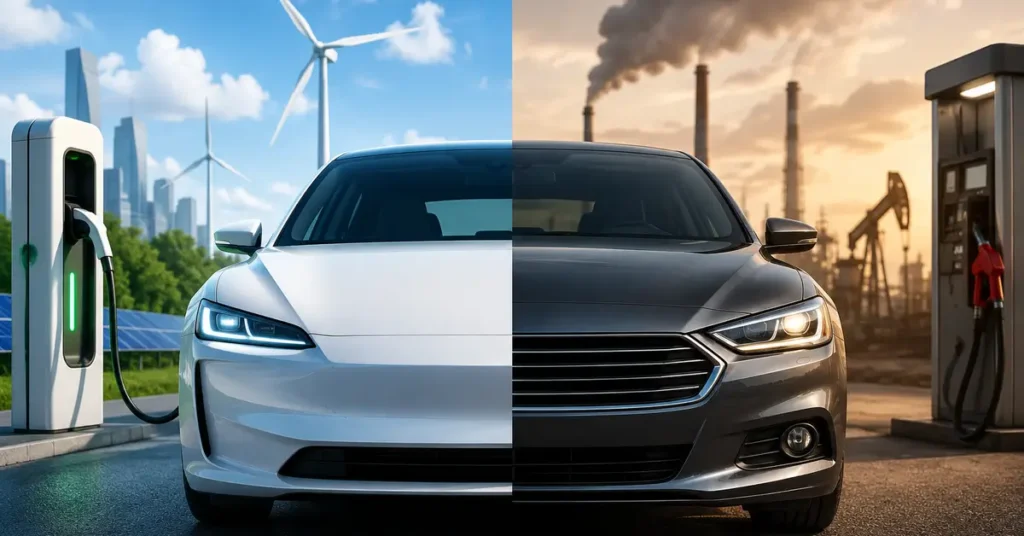
If you are shopping for your next vehicle, this question probably keeps coming up: Electric Cars vs. Gas Cars. Which one actually makes more sense for real life in America?
The honest answer is simple. There is no one size fits all winner.
For some drivers, electric vehicles are the smarter buy because they cost less to run, need less routine service, and feel quick and smooth on the road. For others, gas powered cars still make more sense because they are easier to refuel, often cost less upfront, and fit long distance travel with fewer planning issues.
This guide breaks it all down in plain English. If you have been asking are electric cars better than gas cars, or looking for a clear EV vs gas car comparison, this article will help you decide with confidence.
Quick Answer: Are Electric Cars Better Than Gas Cars?
In many daily driving situations, electric vehicles have a real edge. They are usually more energy efficient, quieter, and cheaper to maintain. The EPA says EVs use about 87 to 91 percent of the energy from the battery and regenerative braking to move the car, while gasoline vehicles only turn about 16 to 25 percent of fuel energy into motion. Source
But that does not mean gas cars are outdated. Gas powered cars still work better for many people who drive long highway miles, live in places with limited charging access, or want a lower purchase price.
So if you want the short version of Electric Cars vs. Gas Cars, here it is:
- Electric cars often win on daily running cost, maintenance, and smooth performance
- Gas cars often win on upfront price, refueling speed, and road trip ease
The better choice depends on how, where, and how often you drive.
Electric vs Gas Car Cost Comparison
One of the biggest things buyers care about is money. And this is where the decision gets more personal.
Upfront price
In many cases, gas powered cars still have a lower sticker price than comparable electric vehicles. That matters if you are trying to keep your monthly payment down. Even though EV pricing has become more competitive, many shoppers still notice the higher starting cost.
That said, price alone does not tell the full story.
Fuel or charging cost
Electric cars usually cost less per mile to operate, especially if you charge at home. The U.S. Department of Energy notes that electricity can cost about 3 to 10 cents per mile in electric only driving, while gasoline can range much higher depending on the vehicle and fuel prices. Source
This is where the electric vs gas car cost comparison starts to shift. A gas car may be cheaper to buy, but an EV can pay you back over time through lower operating costs.
Long term ownership
Long term value depends on several things:
- your local gas prices
- your home electricity rates
- how much you drive each year
- whether you use public fast charging often
- what model you choose
If you drive a lot and can charge at home, electric vehicles usually look stronger over time. If you drive less, or rely mostly on public charging, the savings may shrink.
Electric vs Gas Car Maintenance Costs
This is one of the clearest advantages for EVs.
When people compare electric vs gas car maintenance costs, electric cars usually come out ahead because they have fewer moving parts. There is no engine oil to change, no spark plugs, no exhaust system, and no traditional transmission with the same maintenance demands.
The Department of Energy says all electric vehicles require less maintenance because they have fewer moving parts and fewer fluids to change. Source
That does not mean electric cars are maintenance free. They still need tires, brakes, cabin filters, suspension work, and the usual wear items. But the routine service list is often shorter and simpler.
Gas powered cars, on the other hand, bring more regular maintenance over time. Oil changes, engine filters, belts, and fuel system related repairs can add up.
So in a real world look at electric vs gas car maintenance costs, EVs usually win.
Electric Cars vs Gas Cars Performance
If you have never driven an EV, this part may surprise you.
In many cases, electric cars vs gas cars performance is not even close when it comes to instant response. Electric motors deliver torque right away, so the car feels quick the moment you touch the pedal. Around town, that can make an EV feel faster and more effortless than many gas powered cars.
Where EVs shine
- quick acceleration from a stop
- smooth and quiet ride
- less vibration
- easy city driving
Where gas cars still have appeal
- longer driving range on many models
- easier refueling on long trips
- more choices in some vehicle segments
- familiar driving feel for traditional buyers
If performance means fast launches and smooth power, EVs often feel more modern. If performance means long range freedom and easy travel anywhere, gas cars still hold a strong position.
Range, Charging, and Everyday Convenience
This is where your lifestyle matters more than trends.
Electric vehicles are getting better every year, but charging is still the biggest practical concern for many buyers. The EPA notes that EV range is often lower than the distance many gas cars can travel on a full tank, though it is usually enough for average daily driving. Source
If you have a garage or driveway and can charge overnight, living with an EV can be very easy. You wake up with a charged car and skip gas station stops.
If you live in an apartment, depend on street parking, or take frequent long road trips, gas powered cars may still feel more convenient.
Gas cars refuel fast. Electric cars charge more slowly, even though charging networks continue to grow. That difference alone can shape the ownership experience.
So in the daily routine part of EV vs gas car ownership, the winner depends on your access to home charging.
Which One Is Better for the Environment?
This topic matters to many shoppers, and the answer is more balanced than some people assume.
Electric vehicles produce no tailpipe emissions. The EPA also says total emissions associated with driving EVs are typically lower than those of gasoline cars, even after accounting for the electricity used for charging. Source The EPA also states that EVs typically have a smaller carbon footprint over their lifetime than gasoline cars. Source
That said, the full picture depends on how electricity is generated in your area and how the vehicle is built. EV battery production does carry environmental impact. But over time, many electric vehicles still come out cleaner overall.
So if your main concern is lowering driving related emissions, electric vehicles usually have the advantage.
Who Should Buy an Electric Car?
An EV may be right for you if:
- you drive mostly around town or in the suburbs
- you can charge at home
- you want lower routine maintenance
- you like quick, quiet performance
- you plan to keep the car long enough to benefit from lower running costs
Who Should Buy a Gas Car?
A gas car may be the better choice if:
- you drive long distances often
- you do not have easy charging access
- you want the lowest upfront cost
- you need fast refueling without route planning
- you prefer a wider used car market with familiar options
Final Verdict
When it comes to Electric Cars vs. Gas Cars, the smarter choice is the one that fits your life, not the one with the loudest hype.
If you want lower running costs, less maintenance, and a smooth modern drive, electric vehicles are hard to ignore. If you want easier road trips, quicker refueling, and a lower purchase price, gas powered cars still deserve a serious look.
The best way to think about it is simple. An EV can be the better daily tool. A gas car can still be the better all purpose fallback.
For readers of Autoyologist, the real takeaway is this: do not buy into the argument that one type is perfect for everyone. Compare your budget, your driving habits, your charging access, and your long term goals. Once you do that, the right answer becomes much clearer.
If you want, I can also turn this into a fully polished SEO blog format with meta title, meta description, slug, and FAQ schema ready copy for Autoyologist.
Popular Categories
Latest Article

June 29, 2026

Frequently Asked Questions
Are electric cars better than gas cars for daily driving?
For many people, yes. If your commute is predictable and you can charge at home, an EV can be cheaper to run and easier to live with day to day.
Are gas powered cars still worth buying?
Absolutely. Gas powered cars still make sense for drivers who travel far, need fast refueling, or want a lower starting price.
Which has lower electric vs gas car maintenance costs?
Electric vehicles usually have lower routine maintenance costs because they have fewer parts that need regular service.
How do electric cars vs gas cars performance compare?
EVs usually feel quicker off the line and smoother in traffic. Gas cars still offer strong range and fast refueling, which many drivers value just as much.

A dedicated platform for car lovers, offering honest reviews, guides, and updates from the automotive world.