Car Comparison
Honda CR-V vs Subaru Forester: Complete Comparison Guide
Share this :
Honda CR-V vs Subaru Forester: Complete Comparison Guide
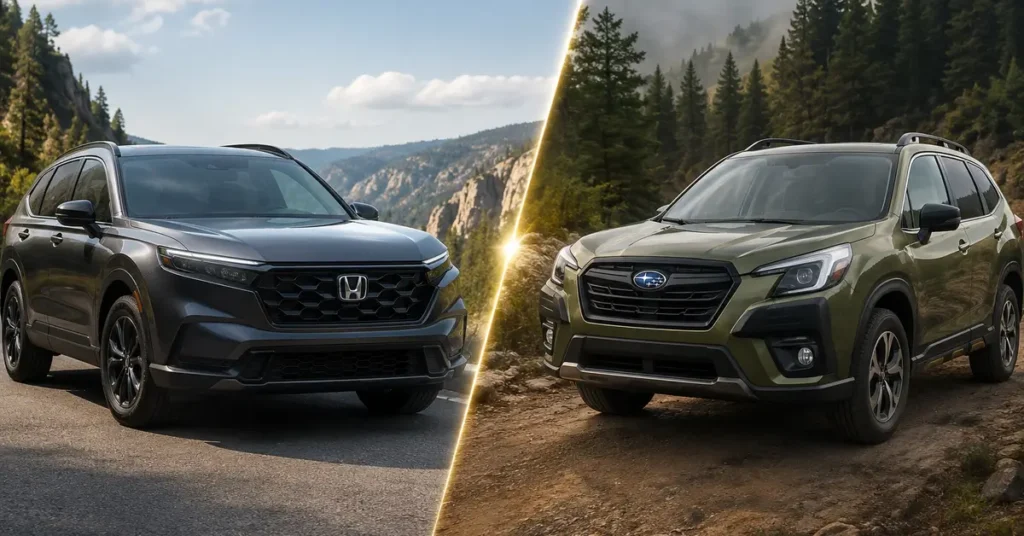
Choosing the right compact SUV is not easy anymore. Every year, manufacturers improve comfort, safety, technology, and fuel efficiency, making the decision even harder. Two of the strongest contenders in this segment are the Honda CR-V and the Subaru Forester. Both have earned an excellent reputation for reliability, practicality, and long term value.
If you are comparing these two popular SUVs, this guide will help you understand where each model stands. From performance and interior space to safety, fuel economy, and pricing, we will cover everything you need before making a purchase.
Whether you are a daily commuter, a growing family, or someone who enjoys weekend adventures, this Honda CR-V vs Subaru Forester comparison will help you find the SUV that fits your lifestyle.
Honda CR-V vs Subaru Forester at a Glance
| Feature | Honda CR-V | Subaru Forester |
|---|---|---|
| Engine | 1.5L Turbo or Hybrid | 2.5L Naturally Aspirated |
| Horsepower | Up to 204 hp Hybrid | 180 hp |
| Drivetrain | FWD or AWD | Standard AWD |
| Fuel Economy | Up to 40 MPG Hybrid | Around 29 MPG Combined |
| Cargo Space | Up to 76.5 cubic feet | Up to 74.4 cubic feet |
| Seating | 5 | 5 |
| Best For | Families and commuters | Outdoor enthusiasts |
Both SUVs are among the best compact SUV choices available today, but they appeal to different types of drivers.
Exterior Design
The Honda CR-V has a modern and upscale appearance. Its bold front grille, clean body lines, and refined styling give it a premium look without becoming flashy. It feels more like a luxury SUV than a traditional compact crossover.
The Subaru Forester focuses on practicality. Its upright design provides excellent visibility and more headroom inside. While it may not look as sporty as the CR-V, it offers a rugged appearance that many outdoor lovers appreciate.
If style is your priority, the CR-V has the advantage. If you prefer function over fashion, the Forester delivers.
Interior Comfort and Cabin Quality
The cabin is where most owners spend their time, and both SUVs perform well.
The Honda CR-V offers soft touch materials, comfortable seats, and an elegant dashboard layout. Higher trims include leather seating, wireless smartphone charging, and a larger infotainment display.
The Subaru Forester provides a spacious cabin with durable materials that can handle daily family use and outdoor activities. The upright seating position makes entering and exiting the vehicle easier, especially for older passengers.
Honda CR-V Interior Highlights
- Spacious rear seating
- Premium cabin materials
- Large center touchscreen
- Quiet ride quality
- Excellent driving position
Subaru Forester Interior Highlights
- Outstanding outward visibility
- Comfortable upright seats
- Easy to use controls
- Durable interior finishes
- Large panoramic sunroof on higher trims
In this Honda CR-V Car comparison the CR-V feels slightly more refined, while the Forester wins for visibility and simplicity.
Engine Performance
Performance is one of the biggest differences between these SUVs.
The Honda CR-V offers a responsive turbocharged engine along with an efficient hybrid option. Acceleration feels smooth, making highway merging and passing effortless.
The Subaru Forester uses a naturally aspirated 2.5 liter engine. It delivers predictable power but feels less energetic during quick acceleration.
Honda CR-V
- Turbocharged performance
- Smooth automatic transmission
- Hybrid model available
- Strong acceleration
Subaru Forester
- Naturally aspirated engine
- Linear power delivery
- Standard Symmetrical All Wheel Drive
- Reliable everyday performance
Drivers looking for stronger acceleration usually prefer the Honda.
Fuel Economy
Fuel costs continue to matter for most buyers.
The Honda CR-V Hybrid is one of the most fuel efficient SUVs in its class, reaching around 40 MPG in combined driving.
The Subaru Forester offers respectable efficiency, averaging about 29 MPG combined with its standard AWD system.
If saving money at the gas station is important, the Honda clearly comes out ahead.
Ride Quality and Handling
The Honda CR-V delivers a smooth, quiet ride that absorbs road imperfections with ease. Steering feels light, making parking and city driving simple.
The Subaru Forester is equally comfortable but shines on rough roads and snowy conditions. Thanks to its standard AWD and higher ground clearance, it inspires confidence on dirt roads and slippery surfaces.
Choose the Honda for everyday commuting.
Choose the Subaru if you regularly drive in harsh weather or explore unpaved roads.
All Wheel Drive Capability
One of Subaru’s biggest strengths is its standard Symmetrical All Wheel Drive system.
Unlike many competitors, every Forester includes AWD as standard equipment. Combined with generous ground clearance, it performs exceptionally well during winter driving.
Honda offers AWD as an option rather than standard. While it performs well, it is designed more for occasional slippery roads than serious off road adventures.
The Subaru Forester comparison clearly favors Subaru when road conditions become challenging.
Technology Features
Both SUVs include modern technology that makes driving easier and safer.
Honda CR-V
- Wireless Apple CarPlay
- Android Auto
- Wireless charging
- Digital driver display
- Available premium audio
Subaru Forester
- STARLINK infotainment
- Apple CarPlay
- Android Auto
- Multiple USB ports
- User friendly interface
Honda’s infotainment system feels more polished, while Subaru focuses on ease of use.
Safety Features
Safety is a major reason these SUVs remain top sellers.
Honda includes the Honda Sensing suite with features such as:
- Adaptive Cruise Control
- Lane Keeping Assist
- Collision Mitigation Braking
- Road Departure Mitigation
- Traffic Sign Recognition
Subaru includes EyeSight Driver Assist Technology with:
- Adaptive Cruise Control
- Lane Centering
- Pre Collision Braking
- Automatic Emergency Steering
- Lane Departure Prevention
Both SUVs consistently receive excellent crash safety ratings.
It is difficult to declare a clear winner because both manufacturers prioritize occupant protection.
Cargo Space
Families often compare cargo capacity before buying.
The Honda CR-V offers one of the largest cargo areas in the compact SUV segment.
The Subaru Forester also provides impressive cargo space with a wider opening that makes loading bulky items easier.
If you frequently carry luggage, sports equipment, or groceries, both vehicles perform very well.
Reliability and Maintenance
Honda has built a reputation for producing reliable vehicles with affordable maintenance costs.
Subaru also enjoys strong reliability, especially among owners who maintain their vehicles regularly.
Routine maintenance for both SUVs is straightforward, although Subaru owners should pay closer attention to AWD related service intervals.
Both models have strong resale values.
Pricing
Pricing varies depending on trim level and optional features.
Generally:
- Honda CR-V starts slightly higher.
- Subaru Forester offers more standard equipment, including AWD.
- Honda Hybrid models cost more but can save fuel over time.
If budget matters, compare the total ownership cost rather than the purchase price alone.
Honda CR-V Pros and Cons
Pros
- Excellent fuel economy
- Comfortable ride
- Premium interior
- Hybrid option available
- Large cargo area
Cons
- AWD costs extra
- Higher starting price
Subaru Forester Pros and Cons
Pros
- Standard AWD
- Outstanding visibility
- Great safety features
- Excellent for snow
- Comfortable cabin
Cons
- Slower acceleration
- Cabin design feels simpler
- No hybrid option
Which SUV Should You Buy?
The answer depends on your driving needs.
Choose the Honda CR-V if you want:
- Better fuel economy
- A more refined interior
- Hybrid efficiency
- Smooth highway driving
- Higher overall comfort
Choose the Subaru Forester if you want:
- Standard AWD
- Better capability in snow
- Outdoor adventure readiness
- Excellent visibility
- Lower starting price with AWD included
Final Verdict
When comparing Honda CR-V vs Subaru Forester, both SUVs deliver exceptional value, safety, and reliability. Neither is a bad choice.
The Honda CR-V stands out for its fuel efficiency, comfortable cabin, advanced technology, and premium driving experience. It is an outstanding option for commuters, families, and buyers who spend most of their time on paved roads.
The Subaru Forester excels with standard AWD, excellent visibility, and confidence in difficult weather conditions. It is ideal for drivers who frequently encounter snow, rain, gravel roads, or outdoor adventures.
For most buyers seeking a balanced daily driver, the Honda CR-V earns a slight edge. However, if year round traction and rugged capability are your top priorities, the Subaru Forester remains one of the best compact SUV options available today.
Popular Categories
Latest Article

June 29, 2026

Frequently Asked Questions
Which is better, Honda CR-V or Subaru Forester?
The Honda CR-V is generally better for fuel economy, comfort, and technology. The Subaru Forester is better for all weather driving because every model comes with standard AWD.
Is the Honda CR-V more reliable than the Subaru Forester?
Both SUVs have strong reliability records. Honda is often recognized for lower long term maintenance costs, while Subaru is known for dependable performance when properly maintained.
Which SUV has more cargo space?
The Honda CR-V offers slightly more maximum cargo space, making it a better choice for families who frequently carry luggage, sports gear, or large shopping loads.
Does the Subaru Forester come with all wheel drive?
Yes. Every Subaru Forester includes Symmetrical All Wheel Drive as standard equipment, giving it an advantage in snow and wet road conditions.
Which compact SUV has better fuel economy?
The Honda CR-V Hybrid offers significantly better fuel economy than the Subaru Forester, making it one of the most efficient compact SUVs available.
Is the Honda CR-V worth buying over the Subaru Forester?
If you prioritize comfort, fuel savings, and a refined driving experience, the Honda CR-V is worth buying. If you value year round traction and outdoor capability, the Subaru Forester may be the better fit.

A dedicated platform for car lovers, offering honest reviews, guides, and updates from the automotive world.