
Car Guide
Top 10 Trusted Japan Car Exporters in 2026
Share this :
What Is a Certificate of Entitlement (COE) in Singapore?
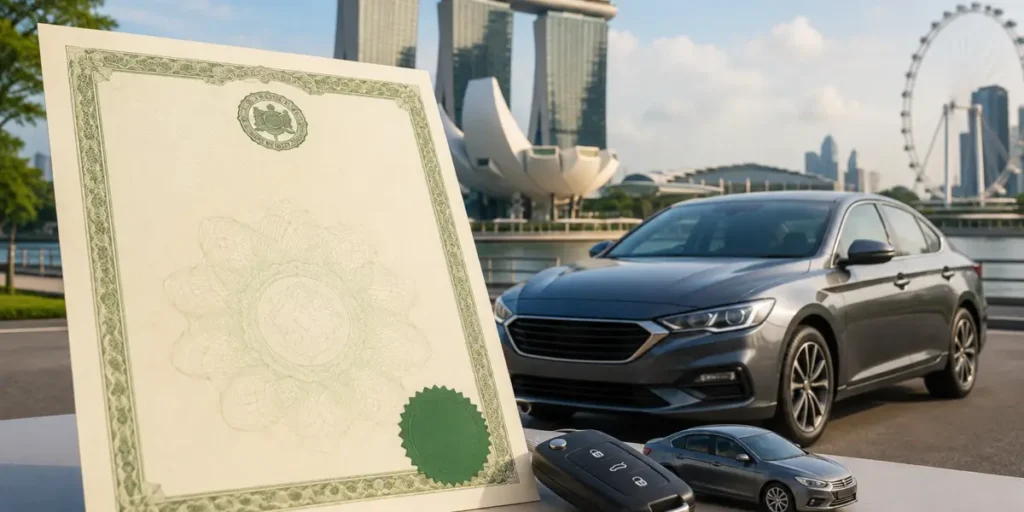
If you have ever looked at car prices in Singapore and wondered why they are so high, the Certificate of Entitlement is one of the biggest reasons. In Singapore, buying a car is not just about paying for the vehicle. You also need the legal right to own and use that vehicle on public roads. That right is called a Certificate of Entitlement (COE).
For many buyers, coe singapore is the single most important concept to understand before shopping for a car. The COE system affects the total cost of ownership, financing decisions, resale value, and even the timing of a purchase.
How COE Singapore works
The easiest way to think about it is this:
- The government sets a limited number of COEs available in each vehicle category.
- Buyers submit bids during scheduled COE bidding exercises.
- Successful bidders receive the certificate and can then register the vehicle.
- The COE is valid for 10 years from the date the vehicle is registered.
This quota system is designed to control the number of vehicles on Singapore roads. Instead of allowing unlimited registrations, the supply of COEs determines how many new vehicles can enter the fleet.
Why Singapore uses a COE system
Singapore has limited land and road space. Without a control mechanism, vehicle ownership could grow faster than infrastructure capacity. The COE framework is intended to manage congestion, support transport planning, and regulate fleet growth.
Because the number of certificates is restricted, the COE price can fluctuate significantly depending on demand.
Vehicle categories
COEs are not all pooled together. They are divided into categories, and the category determines which vehicles can be registered under that certificate. Categories and rules can change over time, so always check the latest information from the Land Transport Authority.
Commonly discussed categories include:
Category | Typical vehicle type |
A | Smaller passenger cars below the power and output thresholds set by LTA |
B | Larger passenger cars above those thresholds |
C | Goods vehicles and buses |
D | Motorcycles |
E | Open category, generally usable for multiple vehicle types according to prevailing rules |
COE bidding explained
The COE bidding process is often compared to a quota auction.
Basic flow
- Submit a bid through an approved bank or channel.
- Choose a bid amount you are willing to pay.
- When the bidding exercise closes, bids are ranked from highest to lowest.
- Successful bidders pay the Quota Premium, which becomes the COE price for that exercise and category.
In practice, many buyers let a dealer handle the bidding. However, understanding the mechanism helps you evaluate dealer quotes and timing.
What are COE results?
COE results are the published outcomes of each bidding exercise. They typically show:
- Quota available in each category
- Number of bids submitted
- Number of successful bids
- Quota Premium, effectively the winning COE price for that category
People follow COE results closely because they are one of the strongest indicators of current vehicle market conditions.
What determines the COE price?
There is no fixed COE price. It changes every bidding exercise based on supply and demand.
Factors that can push prices up:
- Strong demand for new cars
- Limited COE quota
- Economic optimism
- Fleet replacement cycles
Factors that can push prices down:
- Weaker consumer demand
- Higher quota availability
- Economic uncertainty
- Changes in financing conditions
Because the certificate is a major part of vehicle cost, swings in the COE price can materially change what buyers can afford.
A simple example
Imagine a car with a factory and tax adjusted price of S$70,000. If the relevant COE category clears at S$90,000, the COE alone exceeds the underlying vehicle price. The buyer’s final outlay becomes much higher after adding registration fees, taxes, dealer margins, and financing costs.
This is why Singapore car advertisements often separate the vehicle value from the COE component.
What happens when the COE expires?
A standard COE lasts 10 years. Before it expires, the owner has two main choices.
Option | What it means |
Renew the COE | Pay the Prevailing Quota Premium (PQP), which is based on recent COE prices, to extend the vehicle’s life for 5 or 10 years according to current rules. |
Deregister the vehicle | Remove the vehicle from the Singapore registry. Eligible rebates or residual values depend on the vehicle’s circumstances and prevailing regulations. |
For older vehicles, owners often compare renewal cost, maintenance cost, and resale value before deciding.
How COE affects used cars
In Singapore, used car values are heavily influenced by remaining COE lifespan.
A vehicle with 8 years of COE remaining usually commands a different price than a similar vehicle with 2 years remaining, even if mileage and condition are similar. Buyers are effectively purchasing both the vehicle and the remaining right to use it on Singapore roads.
Common misconceptions
Misconception | Reality |
“I own the car forever once I buy it.” | The vehicle registration is tied to a COE with a fixed validity period. |
“COE is a one time tax that never changes.” | COE prices vary with every bidding exercise and renewal uses the prevailing PQP framework. |
“All cars compete for the same COE.” | Passenger cars, motorcycles, commercial vehicles, and the open category have separate quotas and results. |
“A low vehicle price means the car is cheap to buy.” | The COE component can be larger than the vehicle value itself during high price periods. |
Practical tips for buyers
- Check recent COE results for the relevant category before negotiating.
- Ask dealers whether quoted prices are based on a guaranteed COE or a non guaranteed bidding arrangement.
- Compare total drive away cost, not just the advertised vehicle price.
- For used cars, evaluate remaining COE years alongside condition and maintenance history.
- If considering renewal, compare PQP cost with the cost of replacing the vehicle.
Where to check official information
For the latest quota, bidding schedule, category definitions, and published COE results, consult the official channels of the Land Transport Authority and participating banks. Rules, thresholds, and procedures can change over time.
The Bottom Line
The Certificate of Entitlement is the mechanism that controls vehicle ownership growth in Singapore. Understanding how COE Singapore works, following COE results, and recognizing how COE price movements affect total ownership cost are essential for anyone buying, selling, or renewing a vehicle in the country.
For many consumers, the smartest first step is not choosing a car model. It is understanding the COE system that determines whether that car is affordable in the first place. At Autoyologist, our goal is to simplify complex automotive topics and help drivers make smarter decisions. Whether you are buying your first car in Singapore or evaluating a used vehicle, understanding how COE Singapore works can save you money and prevent costly mistakes.
Popular Categories
Latest Article



June 29, 2026

Frequently Asked Questions
1. What is a COE in Singapore?
A Certificate of Entitlement (COE) is a permit that gives an individual or business the right to own and use a vehicle in Singapore for 10 years. Before a new vehicle can be registered, a valid COE must be obtained through the government's bidding system.
2. How does COE bidding work?
COE bidding takes place during scheduled bidding exercises. Buyers submit the maximum amount they are willing to pay for a COE in a specific vehicle category. The highest bids are successful until the available quota is filled. Successful bidders pay the Quota Premium, which becomes the COE price for that category.
3. Why is the COE price so high?
The COE price rises when demand for vehicles exceeds the number of certificates available. Since Singapore limits the number of vehicles on the road through a quota system, strong demand and limited supply can push COE prices significantly higher.
4. What are COE results?
COE results are the official outcomes of each bidding exercise. They show the number of available certificates, the number of bids received, and the final Quota Premium for each category. Buyers often monitor COE results to understand market trends and estimate future vehicle costs.
5. How long does a COE last?
A standard COE is valid for 10 years from the date a vehicle is registered. During this period, the vehicle can legally operate on Singapore roads. Once the COE expires, the owner must either renew it or deregister the vehicle.
6. Can you renew a COE after 10 years?
Yes. Vehicle owners can renew their COE by paying the Prevailing Quota Premium (PQP). Depending on current regulations, owners may choose a 5 year or 10 year renewal period. A vehicle renewed for 5 years cannot be renewed again after that extension ends.
7. What happens if you do not renew the COE?
If a COE is not renewed before its expiry date, the vehicle must be deregistered. The owner can export, scrap, or otherwise dispose of the vehicle according to Singapore's regulations. Driving a vehicle with an expired COE is not permitted.
8. How does remaining COE affect used car prices?
The number of years remaining on a vehicle's COE has a major impact on its resale value. Cars with more remaining COE years generally command higher prices because buyers have a longer period before they need to pay for a renewal or replace the vehicle.
9. Is COE required for both new and used cars?
A valid COE is required for any vehicle registered for use on Singapore roads. When purchasing a used car, the existing COE is transferred along with the vehicle, and its remaining validity becomes an important part of the car's value.
10. What factors influence COE prices in Singapore?
Several factors can affect COE prices, including vehicle demand, the number of certificates available, economic conditions, interest rates, and consumer confidence. When demand increases and supply remains limited, COE prices tend to rise.
11. Can foreigners buy a COE in Singapore?
Yes. Foreigners who meet Singapore's vehicle ownership and registration requirements can participate in the vehicle purchase process and obtain a COE through the standard bidding system, either directly or through a dealer.
12. Why does Singapore use the COE system?
Singapore uses the COE system to control vehicle population growth and manage road congestion. With limited land available for roads and parking, the system helps balance transportation needs while maintaining efficient traffic conditions.

A dedicated platform for car lovers, offering honest reviews, guides, and updates from the automotive world.